
Deep Frying Safety!
Did you know Thanksgiving is the peak day for home cooking fires? When you fry foods, you increase the risk of a cooking fire, according to FEMA. If you decide to fry your turkey this year, here are some helpful safety tips:
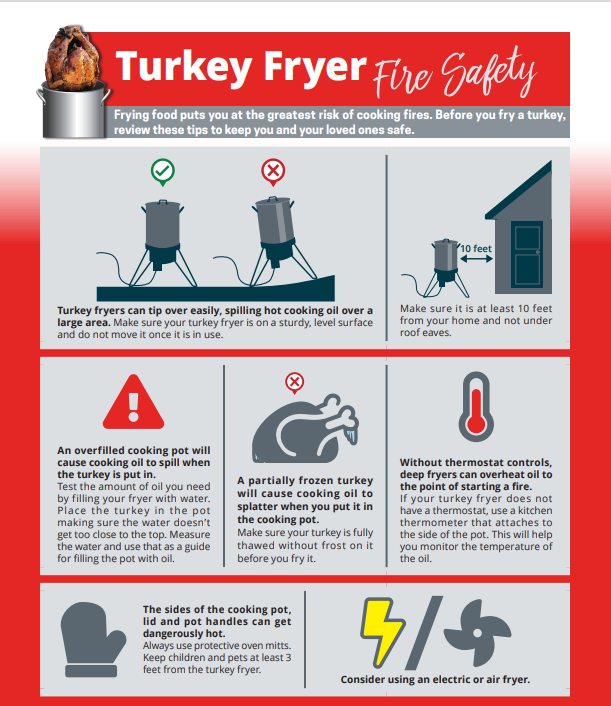
For more information on Cooking Safety visit: Cooking fire safety outreach materials (fema.gov)
Winter Weather
The cold weather is upon us. With cold weather comes icy roads, snowstorms, and heater fires. Here are a few things to remember this winter season:
- Bridges Freeze First – Having open air underneath the bridge means the cold air surrounds the bridge both above and below.
- Freezing Rain – Compared to a typical snowstorm, freezing rain is much more hazardous — especially on the road. While both are dangerous, it’s far easier to lose control of your vehicle on icy pavement, not to mention the increased risk of falling branches and powerlines.
- Black Ice – Black ice is often difficult to see, it is formed when recent rain or snowmelt comes into contact with freezing temperatures. Avoid driving if you can, don’t let black ice sneak up on you!
- Ice Storms – Ice storms can cause power outages that can last up to several days. Ice storms can easily break tree branches, so trim weak or damaged branches around your home, and do not park cars under trees. After you have parked, do not leave your wiper blades raised, contrary to popular belief, doing so increases the chance of wiper damage.
- Staying Warm Without Power – When the power goes out in winter, the cold can be deadly. But even without power, there are still ways to warm things up. Closing blinds and curtains and closing room doors can help contain heat, and stuffing towels in the cracks under doors can help keep the warmth in. And do not forget about eating and staying hydrated – food provides energy to warm the body.
Know your weather terms:
- Winter Storm Warning: Issued when hazardous winter weather in the form of heavy snow, heavy freezing rain, or heavy sleet is imminent or occurring. Winter Storm Warnings are usually issued 12 to 24 hours before the event is expected to begin.
- Winter Storm Watch: Alerts the public to the possibility of a blizzard, heavy snow, heavy freezing rain, or heavy sleet. Winter Storm Watches are usually issued 12 to 48 hours before the beginning of a Winter Storm.
- Winter Weather Advisory: Issued for accumulations of snow, freezing rain, freezing drizzle, and sleet which will cause significant inconveniences and, if caution is not exercised, could lead to life-threatening situations.
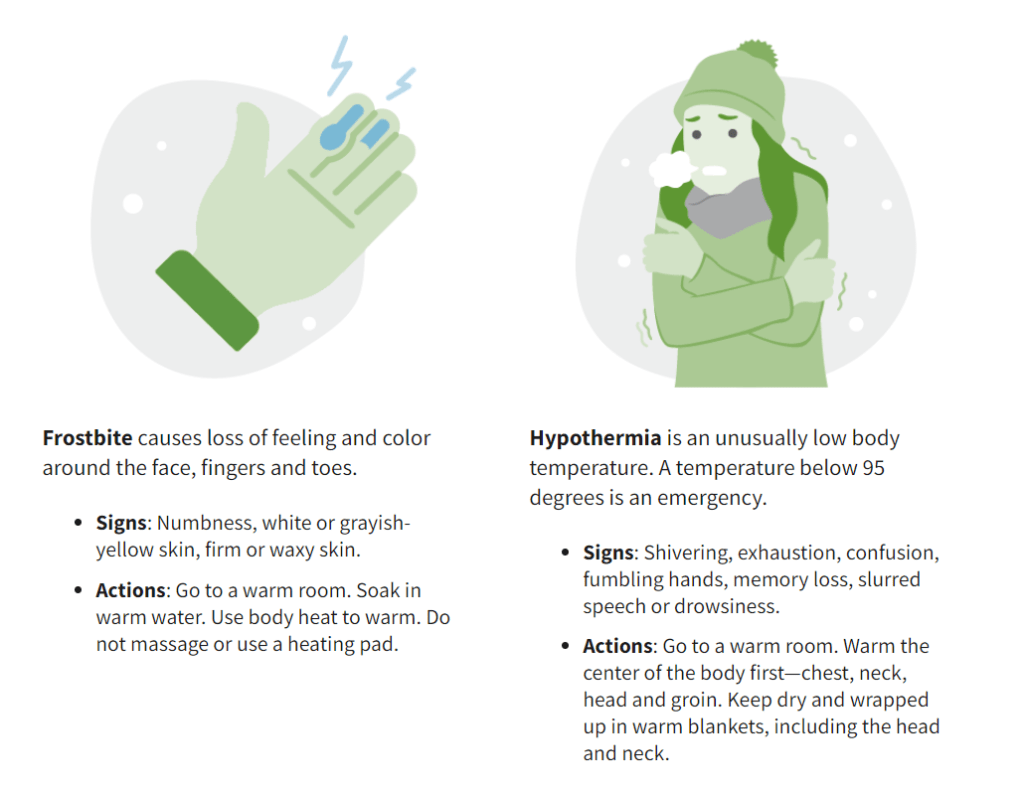
Learn the signs of Frostbite and Hypothermia
Hypothermia is caused by prolonged exposure to very cold temperatures. When exposed to cold temperatures, your body begins to lose heat faster than it’s produced. Lengthy exposures will eventually use up your body’s stored energy, which leads to lower body temperature. Stay safe this winter by learning more about hypothermia and frostbite.
For more information on Winter Safety visit: https://www.ready.gov/winter-weather
Have an idea, question, story, or feedback you would like to share? Send an email to CrisisMgmt@intactinsurance.com
SafetyFIRST! is for internal use and informational purposes only. Questions may be directed to CrisisMgmt@intactinsurance.com