
Global Handwashing Day
Each year on October 15, Global Handwashing Day highlights the importance of handwashing with soap and water at home, in the community, and around the world. Teaching people about handwashing helps them and their communities stay healthy. Handwashing education can:
- Reduce the number of people who get sick with diarrhea by about 23-40%
- Reduce absenteeism due to gastrointestinal illness in schoolchildren by 29-57%
- Reduce diarrheal illness in people with weakened immune systems by about 58%
- Reduce respiratory illnesses, like colds, in the general population by about 16-21%
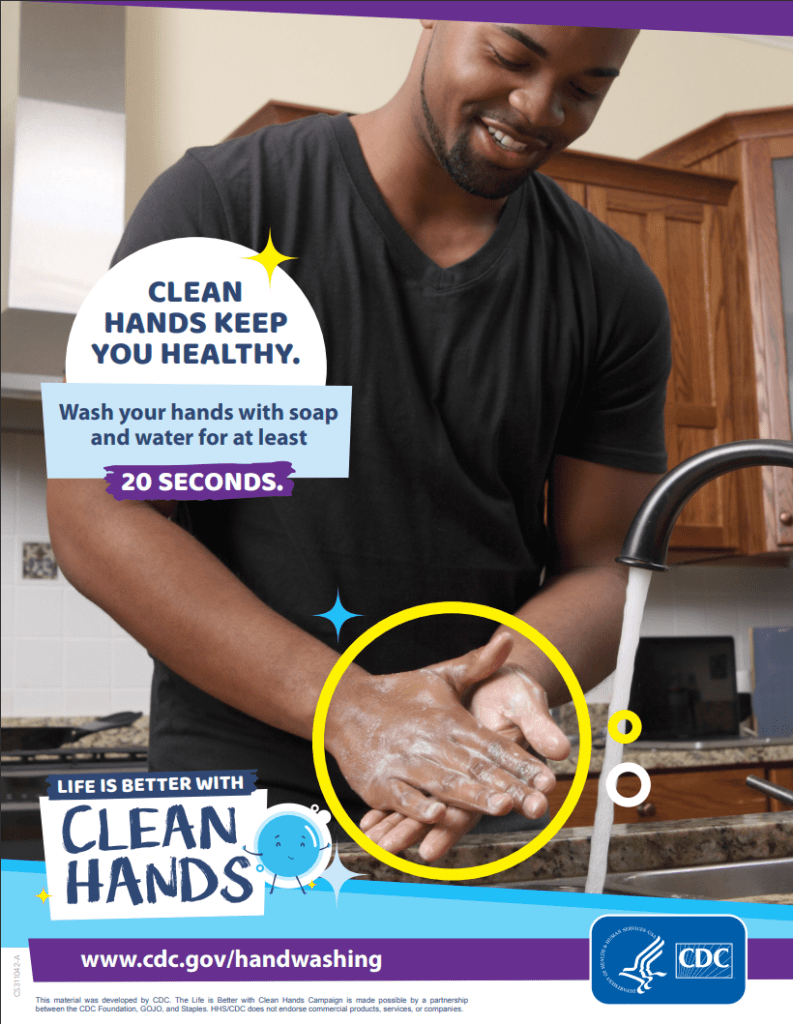
What are the key times to wash hands?
These are CDC’s key times you should wash your hands:
- Before, during, and after preparing food
- Before eating
- Before and after caring for someone at home who is sick with vomiting or diarrhea
- Before and after treating a cut or wound
- After using the toilet
- After changing diapers or cleaning up a child who has used the toilet
- After touching an animal, animal feed, or animal waste
- After handling pet food or pet treats
- After coughing or sneezing
- After touching garbage
- If your hands are visibly dirty or greasy
For more information on Global Handwashing Day, visit: Global Handwashing Day | CDC
Fire Prevention Week – October 9th– 15th
The National Fire Protection Association (NFPA) is a global nonprofit organization, established in 1896, devoted to eliminating death, injury, property, and economic loss due to fire, electrical, and related hazards. NFPA will be celebrating the 100th anniversary for Fire Prevention Week. The campaign slogan this year is, “Fire won’t wait. Plan your escape.”
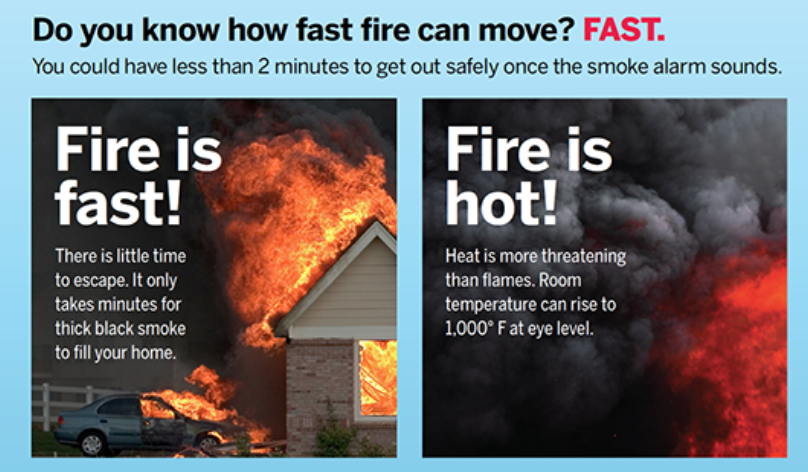
Escape Planning Safety Tips
- Check your smoke detectors annually. Replace the batteries and test they are still operating.
- Make a home escape plan. Draw a map of your home showing all doors and windows. Discuss the plan with everyone in your home.
- Know at least two ways out of every room, if possible. Make sure all doors and windows leading outside open easily.
- Have an outside meeting place (like a tree, light pole, or mailbox) a safe distance from the home where everyone should meet.
- Practice your home fire drill at night and during the day with everyone in your home, twice a year.
- Practice using different ways out.
- Teach children how to escape on their own in case you cannot help them.
- Close doors behind you as you leave.
For more information on Fire Prevention week, visit: Fire Prevention Week (FPW) (nfpa.org)
If the Alarm Sounds
- If the smoke alarm sounds, GET OUT AND STAY OUT! Never go back inside for people or pets.
- If you have to escape through smoke, GET LOW AND GO under the smoke to your way out.
- Call the fire department from outside your home.
Practice Earthquake Drills with the Great ShakeOut
Earthquakes can occur anytime and anywhere without warning. October 20th is the Great ShakeOut Earthquake drill; it is an annual event held on the third Thursday in October. We encourage you to get your families involved and practice earthquake safety in your home this year. In MOST situations, you will reduce your chance of injury if you:
- If you are in a car, pull over and stop. Set your parking brake.
- If you are in bed, turn face down and cover your head and neck with a pillow.
- If you are outdoors, stay outdoors away from buildings.
- If you are inside, stay and do not run outside and avoid doorways.
For more information on the Great ShakeOut visit: Great ShakeOut Earthquake Drills
Protect Yourself During Earthquakes
Know what to do to keep yourself and your loved ones safe during an earthquake. In most situations, you can protect yourself if you immediately DROP, COVER, and HOLD ON.
- Drop (or Lock) – Wherever you are, drop down to your hands and knees and hold onto something sturdy. If you are using a wheelchair or walker with a seat, make sure your wheels are locked and remain seated until the shaking stops.
- Cover – Cover your head and neck with your arms. If a sturdy table or desk is nearby, crawl underneath it for shelter. If no shelter is nearby, crawl next to an interior wall (away from windows). Crawl only if you can reach better cover without going through an area with more debris. Stay on your knees or bent over to protect vital organs.
- Hold On – If you are under a table or desk, hold on with one hand and be ready to move with it if it moves. If seated and unable to drop to the floor, bend forward, cover your head with your arms and hold on to your neck with both hands.
Stay Safe After
- Wash your hands with soap and water after holding on to commonly touched surfaces or objects.
- Expect aftershocks to follow the main shock of an earthquake. Be ready to Drop, Cover, and Hold On if you feel an aftershock.
- If you are in a damaged building, go outside and quickly move away from the building. Do not enter damaged buildings.
- If you are trapped, send a text message or bang on a pipe or wall. Cover your mouth with your shirt for protection.
- Check yourself to see if you are hurt and help others if you have training. Learn how to be the help until help arrives.
For more information on the Earthquake Safety visit: Earthquakes | Ready.gov
Have an idea, question, story, or feedback you would like to share? Send an email to CrisisMgmt@intactinsurance.com
SafetyFIRST! is for internal use and informational purposes only. Questions may be directed to CrisisMgmt@intactinsurance.com