
Earthquake Awareness Month
February is Earthquake awareness month. Everyone should be aware of earthquake hazards and how to protect yourself from them, no matter where you live or work. Earthquakes are a nationwide threat to the United States and its territories throughout the year, not just during certain seasons like most other weather-related hazards. Here are a few ways to protect yourself if you are in an earthquake:
February is Earthquake awareness month. Everyone should be aware of earthquake hazards and how to protect yourself from them, no matter where you live or work. Earthquakes are a nationwide threat to the United States and its territories throughout the year, not just during certain seasons like most other weather-related hazards. Here are a few ways to protect yourself if you are in an earthquake:
- If you are in a car, pull over and stop. Set your parking brake.
- If you are in bed, turn face down and cover your head and neck with a pillow.
- If you are outdoors, stay outdoors and away from buildings.
- If you are inside, stay and do not run outside and avoid doorways.
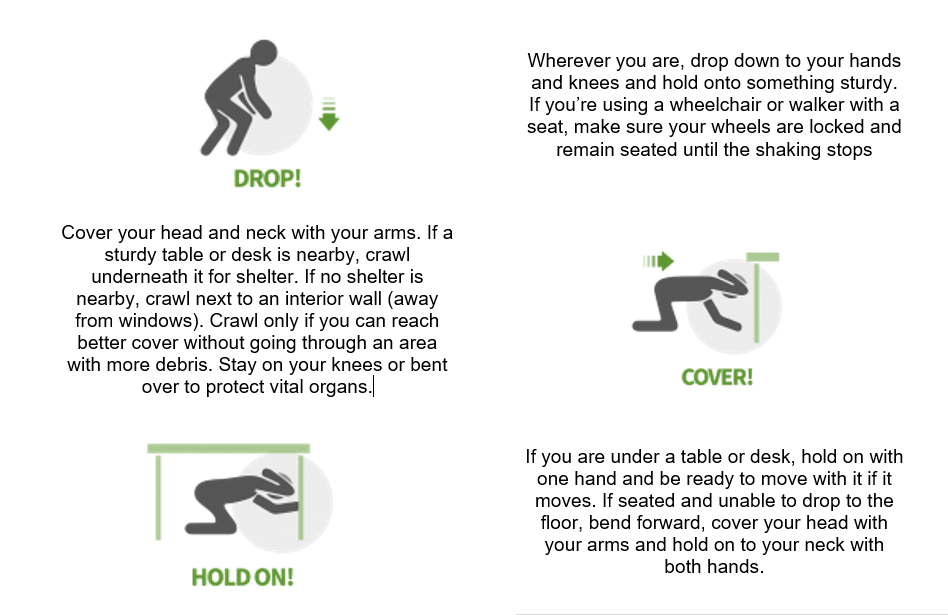
For more information on Earthquake Safety visit: https://www.ready.gov/earthquakes
How to Stay Safe While Driving in a Winter Storm
Whether it’s snow, sleet or ice, winter weather can cause extremely dangerous road conditions. According to the Federal Highway Administration, “1,836 people die annually due to snowy and icy pavement and an additional 136,309 people are injured.” Preparing yourself – and your vehicle – for winter weather is key.
- Bring your cell phone and make sure the battery is CHARGED.
- Plan to travel during daylight and, if possible, take another person with you.
- Let someone know your destination, your route, and when you expect to arrive.
- Before leaving, check the weather reports for all areas you will be passing through.
- Watch out for sleet, freezing rain, freezing drizzle, and dense fog. These are signs driving conditions are dangerous.
- On the road, increase your following distance enough that you’ll have plenty of time to stop for vehicles ahead of you.
- SLOW DOWN. It’s harder to stop your vehicle on slick or snow-covered surfaces.
- Do NOT crowd a snowplow or travel beside the truck. Snowplows travel slowly, make wide turns, stop often, overlap lanes, and exit the road frequently.
For more information on Winter Storm Safety visit: https://www.ready.gov/winter-weather
Children’s Winter Weather Attire and Car Seats
In colder weather, parents typically dress their children in winter coats. But it’s important to know that heavy coats can interfere with the proper harness fit on a child in a car seat. When your child will be secured in a car seat, pick, thin, warm layers. And place blankets or coats around your child after the harness is snug and secure for extra warmth.
For more information on winter coats and Car Sears visit: https://www.safekids.org/blog/ask-expert-winter-coats-and-car-seats
Everyday Preventive Actions to Stop the Spread of Germs
Respiratory infections affect the nose, throat, and lungs; they include influenza (the “flu”), colds and pertussis (Whooping cough). The germs (viruses and bacteria) that cause these infections are spread from person to person in droplets from the nose, throat, and lungs of someone who is sick.
You can help stop the spread of these germs by practicing “respiratory etiquette,” or good health manners. Follow these simple guidelines below:
- Stay away as much as you can from people who are sick.
- Try to stay home if you have a cough and fever.
- See your doctor as soon as you can if you have a cough and fever and follow their instructions. Take medicine as prescribed and get lots of rest.
- Cover coughs and sneezes. Cover your nose and mouth with a tissue when you cough or sneeze. Throw the tissue in the trash after you use it.
- Wash your hands often with soap and water.
- Avoid touching your eyes, nose, and mouth. Germs spread this way.
- Clean and disinfect frequently touched objects and surfaces.
- Don’t share things like towels, lipstick, toys, or anything else that might be contaminated with respiratory germs.
- Don’t share food, utensils, or beverage containers with others.
For more information on Everyday Preventative Actions to Stop the Spread of Germs visit: Preventive Steps | CDC
Have an idea, question, story, or feedback you’d like to share? Send an email to CrisisMgmt@intactinsurance.com
SafetyFIRST! is for internal use and informational purposes only. Questions may be directed to CrisisMgmt@intactinsurance.com